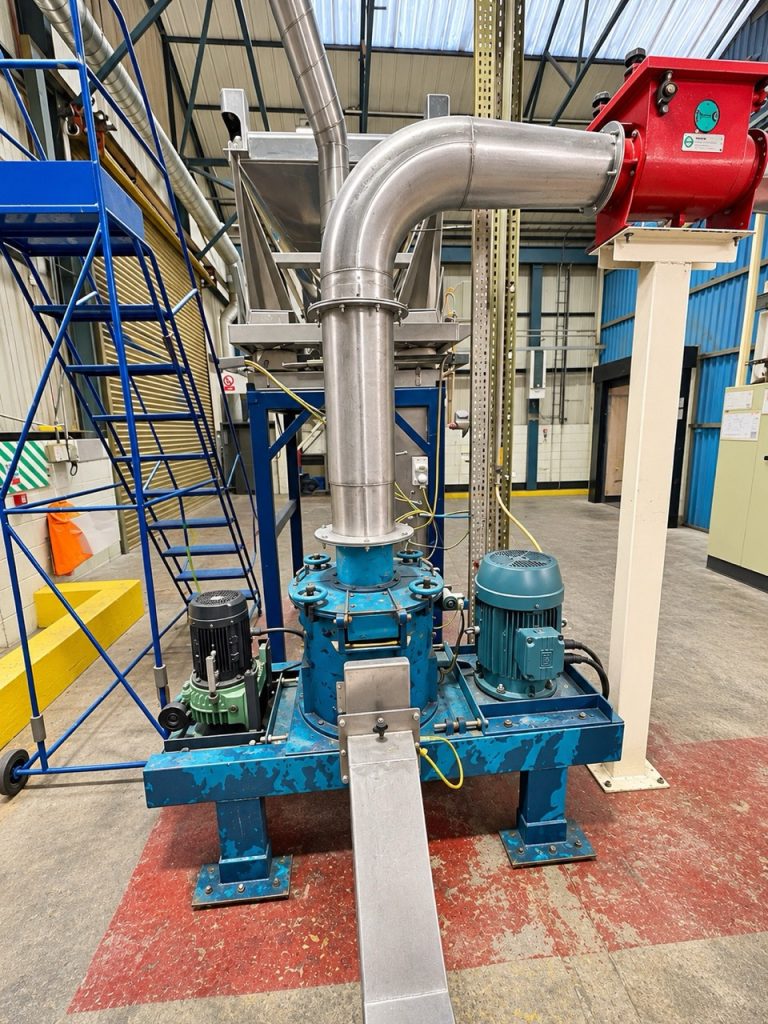
Exwold has provided contract milling services for more than 20 years. Our Air Classifier Mill (ACM) is used to reduce a wide range of materials to a particle size of 100 µm and below, with a consistent and tightly controlled particle size distribution.
An air classifier mill combines impact grinding and particle size classification within a single machine. Oversized particles are automatically returned for further milling, while particles that meet the required size are discharged. ACMs are widely used across the chemical, agrochemical and mineral industries, where the uniformity of a finished powder is often as important as its fineness.
The milling process
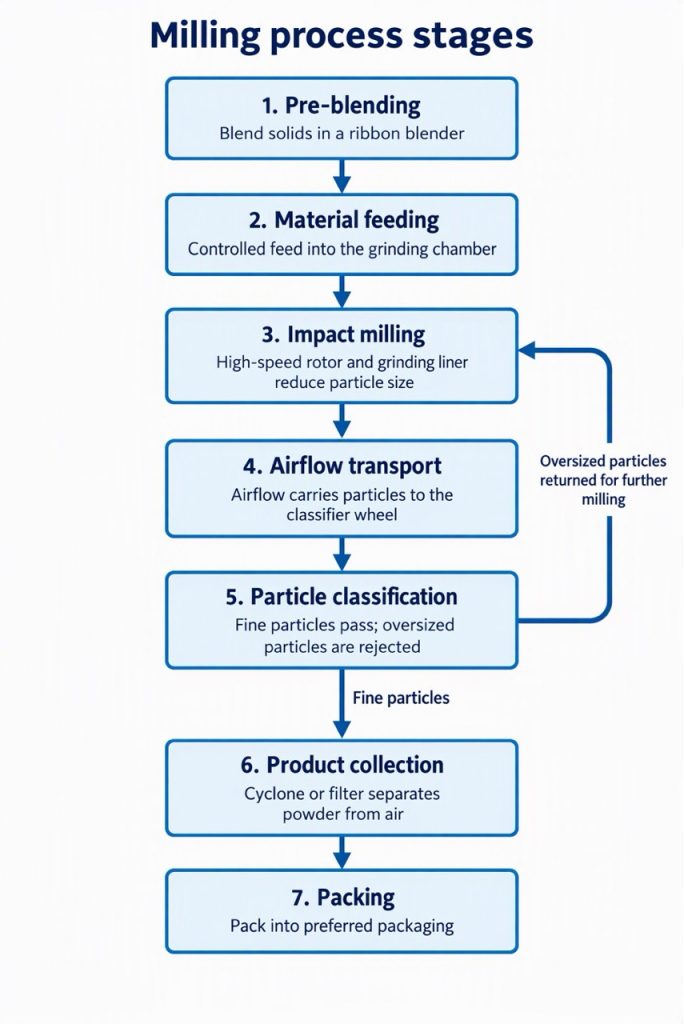
Where a product contains more than one solid component, it can be pre-blended before milling using the ribbon blender at our Haverton Hill site.
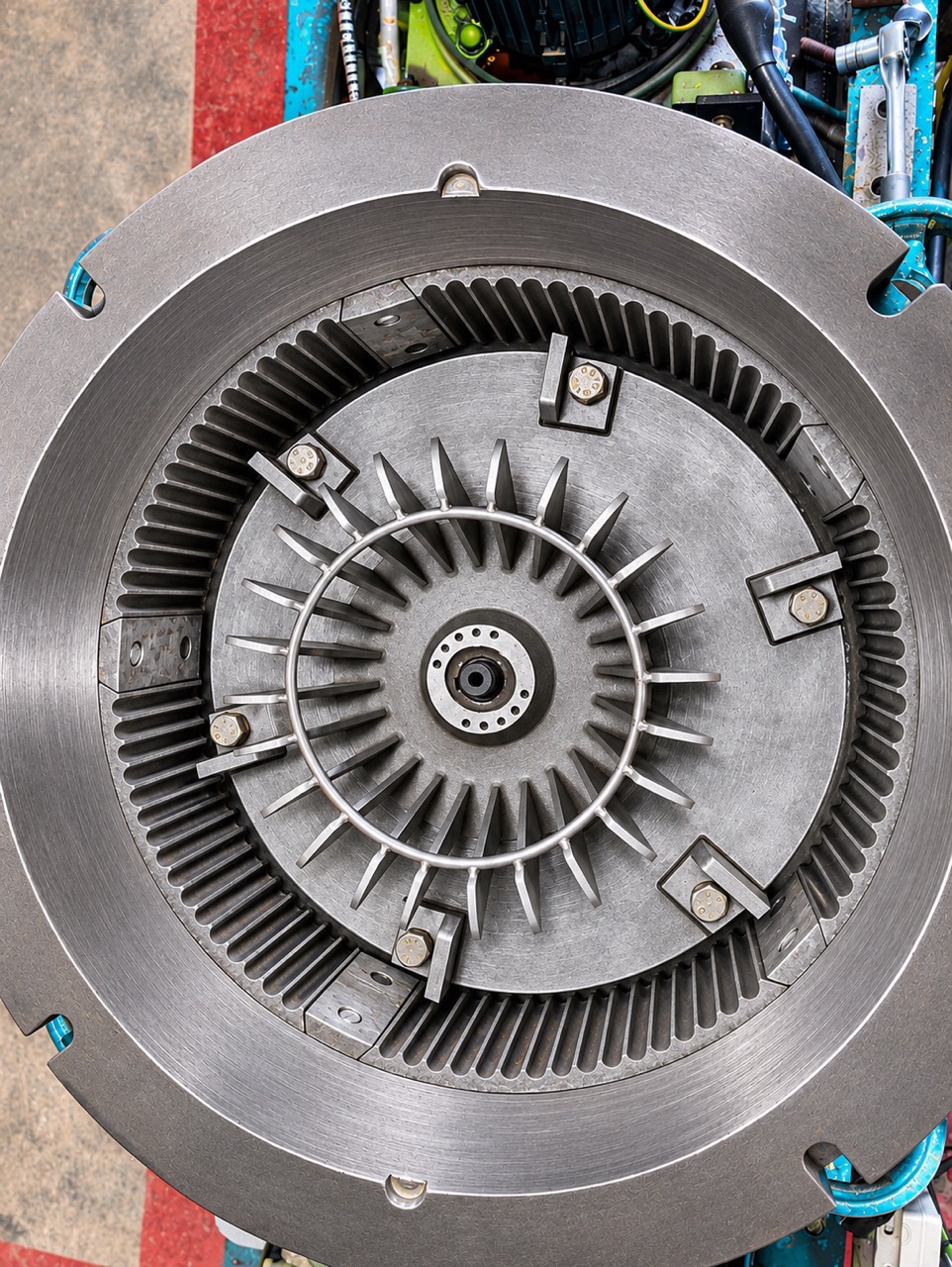
The material is introduced into the grinding chamber through a controlled feed system. A high-speed rotor fitted with hammers accelerates the material against a stationary grinding liner, and the resulting impact reduces the particle size.
A controlled airflow then carries the milled particles to the classifier wheel, which is located within the same machine. The wheel rotates at high speed, allowing fine particles to pass through and exit the mill. Larger particles are rejected and returned to the grinding zone for further size reduction.
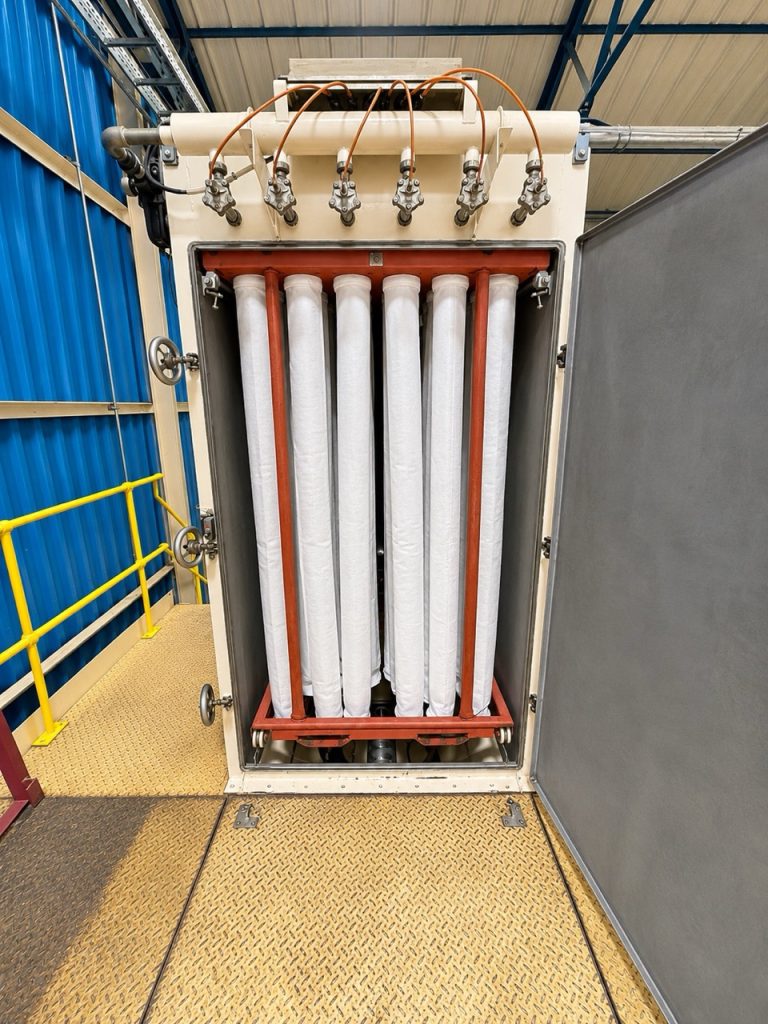
The fine particles are conveyed through ducting to a cyclone or filter system, where the powder is separated from the airflow. The finished product is then packed into the customer's preferred packaging.
Controlling particle size
Particle size is governed by the operating parameters of the mill. Increasing the grinding rotor speed raises the impact energy and generally produces finer particles. Increasing the classifier wheel speed generally results in a finer particle size cut.
Airflow is equally important. It influences how particles are transported through the mill, how effectively they are classified and how long they remain in the grinding zone.
Typical particle size capability
Depending on the material, the ACM can typically produce powders in the 10 to 150 µm range. The achievable particle size depends heavily on the material type, and the figures below are illustrative.
| Application | Illustrative target particle size |
|---|---|
| Fine agrochemical powders | 10–30 µm |
| Wettable powders (WP) | 10–50 µm |
| Industrial chemical powders | 20–100 µm |
| Mineral fillers | 20–150 µm |
Particle size is typically specified using D50 and D90 values. Exwold can verify these using several analytical techniques, including a Malvern Mastersizer as well as dry and wet sieve analysis.
Why choose Exwold
The ACM is suitable for a broad range of materials, including water treatment chemicals, speciality chemicals and agrochemicals. For products with a low minimum ignition energy (MIE), the mill is equipped with a suppression system to allow safe handling.
Because milling and classification take place in a single operation, the need for additional processing stages is reduced. Oversized particles are returned to the grinding zone until they meet specification, giving a more uniform finished product.
As a specialist contract manufacturer, Exwold combines ACM technology with established expertise in chemical handling, containment, quality assurance and formulation. The result is a reliable milling service tailored to each customer's requirements.
To discuss a milling requirement or particle size specification, please contact our team.